Beyond Plastic: Why Virtual Cards Are the Low-Cost Future of Corporate Spend

As modern business is defined by remote workforces, borderless contractor networks, and software-as-a-service (SaaS) subscriptions, corporate finance departments face a growing dilemma: how to empower distributed teams to make necessary purchases without surrendering control or overspending.
For decades, commercial banking institutions held a monopoly on business payments through traditional physical plastic cards. Today, however, those legacy tools have transformed from operational enablers into costly administrative bottlenecks.
Forward-thinking CFOs and operations executives are pivoting toward a faster, safer, and significantly cheaper solution: virtual corporate cards.
Table of Contents:
Understanding the Legacy Framework: The Architecture of Commercial Corporate Cards
The Agility Advantage: How Virtual Cards Reinvent Corporate Spend Management
Feature Comparison: Traditional Bank Cards vs. Virtual Corporate Cards
Maximizing ROI: Why Sparados Delivers the Ultimate Spend Infrastructure for Enterprises
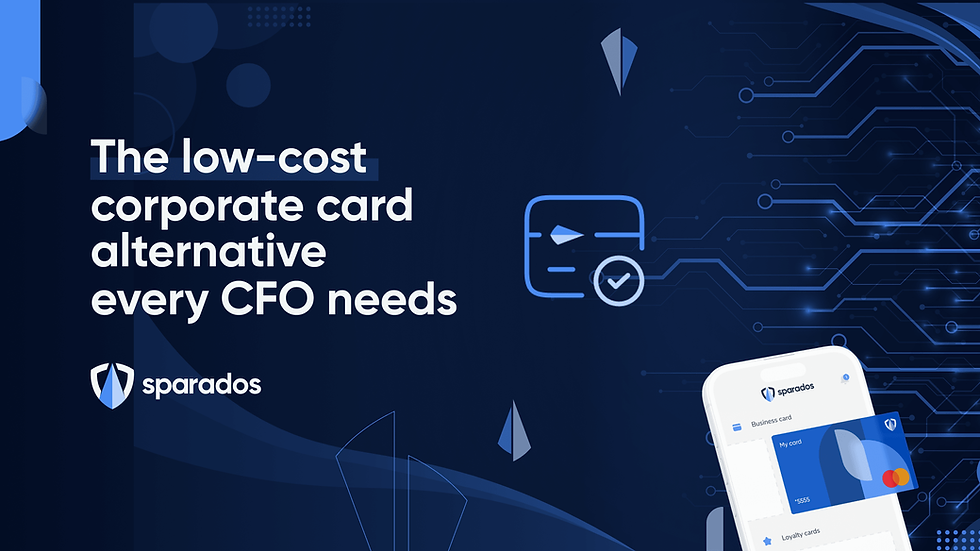
Understanding the Legacy Framework: The Architecture of Commercial Corporate Cards
To understand why a shift is occurring, we must first analyze the traditional financial model.
Historically, a corporate card is a physical payment card (debit or credit) issued by a commercial bank to a business entity. Linked directly to a company’s credit line or master checking account, these cards allow executives, managers, and select personnel to settle expenses, such as business travel, client dining, and physical hardware. without forcing employees to pay out of pocket and request personal reimbursements.
In a centralized office environment, this system worked reasonably well. A handful of senior executives held physical corporate cards, purchases were audited monthly, and transactions occurred primarily at point-of-sale terminals.
However, as businesses shifted to cloud infrastructure, digital marketing channels, and global contractor workforces, the demand for corporate payment cards escalated exponentially. The traditional banking infrastructure was simply never engineered for high-frequency, digital-first transactions across hundreds of distributed team members.
How Physical Cards Drag Down Distributed Operations
When growing enterprises attempt to scale using standard bank cards for business spend, they inevitably encounter severe operational friction, financial leakage, and security vulnerabilities.
High Fee Structures and Hidden Overheads
Traditional banks rely on heavy fee models to maintain their physical infrastructures. Companies are routinely burdened with:
Annual Card Fees: Paying recurring annual dues per physical card issued.
Foreign Exchange (FX) Markups: High conversion margins on international SaaS tools or remote supplier invoices.
Card Replacement Fees: Additional costs whenever cards are lost, stolen, or reissued.
Operational Friction and Issuance Delays
Ordering a traditional physical card for a new hire or contractor involves credit reviews, manual approval workflows, and postal shipping. Waiting 1 to 3 weeks for a piece of plastic to arrive paralyzes time-sensitive projects and onboarding workflows.
Catastrophic Security and Fraud Exposure
Physical corporate cards are inherently static. Sharing a single plastic card’s details across multiple vendors or team members creates a dangerous single point of failure:
If a card number is compromised in a data breach, the entire card must be canceled.
Dozens of vital business subscriptions tied to that card immediately bounce, disrupting business continuity.
Tracking down who authorized an unauthorized transaction becomes an accounting nightmare.
The Administrative Nightmare of Reconciliation
Reconciling physical card spend requires chasing down paper receipts, manually matching invoices to bank statements weeks after the purchase, and auditing retroactively. This places an unnecessary burden on finance departments and inflates month-end closing cycles.
The Agility Advantage: How Virtual Cards Reinvent Corporate Spend Management
A virtual card is a digital-first payment instrument consisting of a unique 16-digit card number, CVV, and expiration date generated instantly via software. Designed to function seamlessly online or through mobile wallets (such as Apple Pay and Google Pay), virtual cards serve as a direct, low-cost alternative to legacy commercial bank cards.
Instead of issuing one physical card to an individual, companies can generate unlimited, purpose-driven virtual cards tied to specific budgets, vendors, or projects.

Key Strategic Benefits of Virtual Spend Infrastructure
Instant Scale & Availability: Finance managers can generate and issue a fully functional virtual card to an employee or global contractor in under 10 seconds.
Programmable Spend Controls: Set immutable spend caps, daily transaction limits, specific expiration dates, or vendor lock-in rules (e.g., locking a card strictly to AWS or Google Ads).
Single-Use Vendor Security: Issue single-use or "burner" virtual cards for trial software subscriptions or isolated contractor payouts. Once the transaction completes, the card auto-terminates, preventing unexpected recurring renewals.
Real-Time Visibility: CFOs and controllers gain live visibility into company spending as it happens, ending reliance on delayed month-end bank statements.
Feature Comparison: Traditional Bank Cards vs. Virtual Corporate Cards
Feature / Capability | Traditional Commercial Bank Cards | Modern Virtual Corporate Cards |
Issuance Speed | 1 to 3 weeks (Physical delivery) | Instant (Generated in seconds) |
Maintenance Fees | High per-card fees & FX markups | Near-zero or low flat software rate |
Contractor Utility | High risk; difficult to issue | Ideal; isolated, budget-capped cards |
Spend Controls | Static monthly account limit | Granular daily, vendor, & category caps |
Security Architecture | Single point of failure if breached | Isolated cards limit breach impact |
Accounting Integration | Manual receipt matching & auditing | Automated matching & ERP syncing |
Maximizing ROI: Why Sparados Delivers the Ultimate Spend Infrastructure for Enterprises
While the advantages of virtual payments are clear, realizing their full value requires a enterprise-grade spend management platform. Sparados provides the ultimate low-cost virtual card infrastructure tailored specifically for modern businesses, startups, and enterprise operations.

Why Leading Finance Teams Choose Sparados:
Unmatched Cost Efficiency: Sparados eliminates predatory banking fees and hidden maintenance charges, offering transparent pricing designed to maximize your bottom line.
Global Contractor & Employee Empowerment: Issue virtual cards instantly to international team members and vendors without paying excessive foreign exchange margins.
Automated Receipt Capture & Reconciliation: Employees capture receipts via web or mobile app instantly. Sparados uses intelligent OCR technology to match receipts to transactions automatically, cutting month-end closing times by up to 80%.
Direct ERP & Accounting Integrations: Sync your financial data effortlessly with QuickBooks, Xero, NetSuite, and major accounting platforms for error-free audit trails.
Proactive Budget Defense: Block subscription overcharges before they happen. Sparados virtual cards auto-decline any charge that exceeds pre-approved thresholds, giving you total command over corporate cash flow.
Transition to Smarter Corporate Spend Today
Continuing to rely on outdated physical bank cards exposes your organization to unnecessary fees, operational delays, and security risks. Transitioning to virtual card spend management with Sparados turns expense tracking from a cost center into a strategic advantage.
Ready to streamline your payments, protect your bottom line, and empower your global workforce?
Contact the Sparados team today to schedule a personalized demo and discover how easy corporate spend management can be.


